Infrastructure that keeps working when parts of it don't.
Sovereign resilient infrastructure across three connected layers: L360 HVT space mesh, photonic backbone, and private client-governed AI.
The problem with single paths.
Traditional space and subsea infrastructure is constructed around point-to-point trunklines. When an undersea cable is dragged, a solar flare blinds a transponder, or an adversary jams an uplink, the entire tributary partition collapses into blackouts.
Ground stations are the hidden bottleneck: losing two adjacent gateways can paralyze conventional constellations even when all orbital payloads are intact. Traditional rerouting relies on centralized ground scheduling with multi-minute convergence delays.
Aetheris solves this through the L360 HVT autonomous optical lattice. When a node or link evaporates, horizontal, vertical, and cross-layer triangular conduits reroute data in under 0.5 ms without ever waiting for terrestrial intervention.
L360 HVT: Tri-Layer Sovereign Mesh
A resilient space architecture cannot rely solely on nearest-neighbor rings. L360 establishes three distinct dimensional links closing redundant loops across LEO, MEO, GEO, and ground gateways.
Horizontal (Intra-Layer)
High-throughput optical ring neighbors within the same orbital altitude. Operates continuously along polar Walker star planes (12 planes × 8 sats = 96 nodes), transferring uninterrupted east-west orbital traffic.
Vertical (Inter-Layer & Ground)
Couples lower orbits to higher tiers (MEO 20,000 km and GEO 35,786 km) as well as 8–12 worldwide ground stations. Ground tracking requires ≥10° elevation mask with max 2 concurrent links per station.
Triangular (Cross-Layer Mesh)
Diagonal laser links connecting MEO nodes to adjacent LEO neighbors outside their vertical partner. Closes 3-node triangular loops (verified in NetworkX graph simulation), eliminating cut-off single points of failure.
Stress-Test Survival Matrix
Simulated against worst-case adversary conditions: node destruction, simultaneous pair failures, regional 1,500 km denial, loss of 3 orbital planes, and ground jamming.
Single Node Failure (Worst Case)
Tested Vector: Any LEO, MEO, or GEO node
Traffic reroutes via immediate adjacent triangular bypass link.
Photonic Backbone: Thin-Film Lithium Niobate (TFLN)
Traditional transponders suffer severe RF dispersion, thermal expansion limits, and electrical interconnect bottlenecks. Aetheris deploys electro-optic TFLN Mach-Zehnder optical switch engines directly in the optical domain.
TFLN Mach-Zehnder Switch Core
Benes non-blocking topology. Switch path grows as 2 log₂ N instead of traditional 2N-1, reducing optical loss to <3.5 dB across a 64×64 matrix. 35 dB extinction ratio per phase modulator.
Optical Doppler & Coherent DSP
Compensates for ±4 to 8 GHz orbital Doppler shifts caused by relative satellite velocities up to 14 km/s. Uses orbital state vector feed-forward and digital carrier recovery.
Aperture & Laser Terminal
Ultra-lightweight gimballed telescope. 10 cm / 1 W aperture closes 100 Gbps across 1,500 km LEO links. 30 cm / 5 W narrow-beam closes 38,000 km GEO links with sub-microradian pointing accuracy.
Quantum-Safe Cryptographic Fabric
Post-quantum cryptography (Kyber/Dilithium) encrypts high-throughput 100 Gbps bulk payloads. Optional QKD (Quantum Key Distribution) channels distribute quantum entropy keys over clean optical paths.
Private AI: Client-Sovereign LLM Infrastructure
No client data or operational commands touch third-party commercial cloud APIs. Open-weight foundation models run strictly on customer-controlled high-memory GPU servers with hardware-enforced policy gates.
Evidence Over Claims
Performance, accuracy, concurrency, and cost are benchmarked on actual client workloads before accepting results.
No Unverified Execution
The model can recommend or prepare actions, but policy and authorization gates decide whether a tool or command may execute.
Fail Safely & SAFE HOLD
Ambiguous authorization, stale lease, or failed dependency halts into an explicit SAFE HOLD state with auditable logs rather than executing a guessed action.
Strict Order of Work
1. Prompts & Policy Gates → 2. Verified Retrieval (RAG) → 3. LoRA/QLoRA adapter tuning only where justified. Never pre-train blindly.
Approved internal applications, operator consoles, encrypted telemetry
Mutual TLS, tenant/role access, cryptographic request IDs, rate quotas
Allowlists, compliance rules, human sign-off triggers, SAFE HOLD engine
Qwen3.8-27B dense or Kimi K3 MoE on vLLM/SGLang with strict memory isolation
Vector embeddings with tenant metadata isolation; strict source-citation audit
Idempotent schemas, hard timeouts, schema validation, zero direct DB execution
Tamper-evident run records capturing prompt hashes, tool params, and gate decisions
The 8-Step Sovereign Governance Loop
Autonomous systems must operate within strict multi-domain boundaries (Earth, Sea, Air, Space, Cyberspace). No step in the loop proceeds without verified evidence.
Capture raw telemetry, RF signatures, orbital state, and network health.
Fuse sensor data, map network topology, identify anomalies or jamming.
CRITICAL GATE: Validate identity, check crypto signatures, test invariants.
Generate candidate routing maneuvers or policy interventions.
Check compliance rules, human sign-off levels, and multi-signature gates.
Deploy atomic commands to TFLN optical switches or server instances.
Observe telemetry delta, measuring actual vs predicted performance.
Commit cryptographic attestation to immutable audit records.
Unverified claim; strictly rejected at Gate 03.
Telemetry timestamped by originating node.
Traceable schema and cryptographic signature verified.
Automated regression and invariant checks passed.
Hardware security module (HSM) attestation + human operator multi-key.
24-Week Evidence-Gated Roadmap
8 controlled phases from discovery to mission operational readiness. No phase concludes without an independently verified evidence gate.
Workload & Infrastructure Discovery
Use case profiling, GPU availability audit, data security perimeter definition.
GATE 1: Hardware procurement & license sign-off
Technical Video Archive
Recorded hardware testbenches, simulated laser handovers, and live terminal captures of policy gates in action.

Sovereign LEO Space Mesh & Laser Cross-Links
High-fidelity orbital simulation of sovereign Low Earth Orbit constellation dynamics, inter-satellite laser links (ISL), and continuous low-latency mesh interconnects over regional sovereign territory.
Sovereign LEO Space Mesh & Laser Cross-Links
Polar Walker Mesh // Multi-Link Optical ISL // 0% Terrestrial Intercept
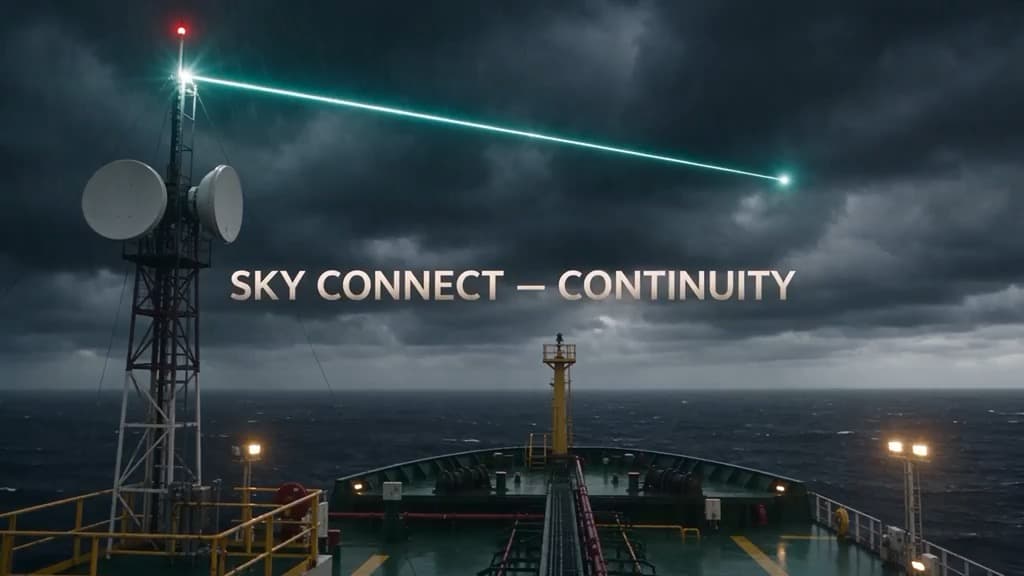
Sky Connect — Continuity & Maritime Laser Uplink
Sky Connect Terminal // Optical ISL Uplink // Maritime All-Weather Lock

The Age of Autonomous AI & Governed Infrastructure
Autonomous Multi-Agent Architecture // Strict Boundary Gates // Zero Trust
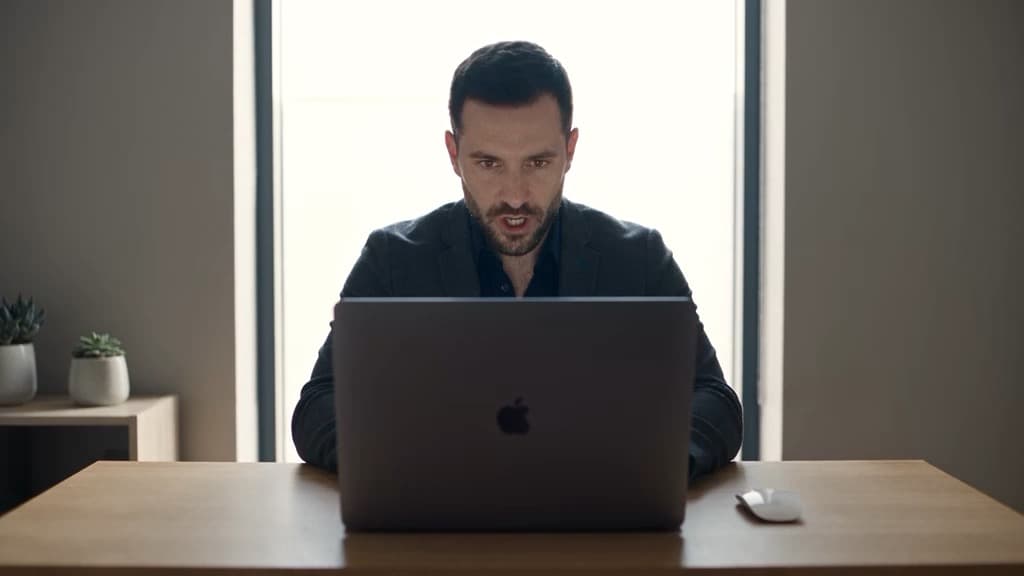
UturnU Decision Intelligence & Autonomous Travel Agent
UturnU Autonomous Agent // Multi-Attribute Utility Engine // Live UI
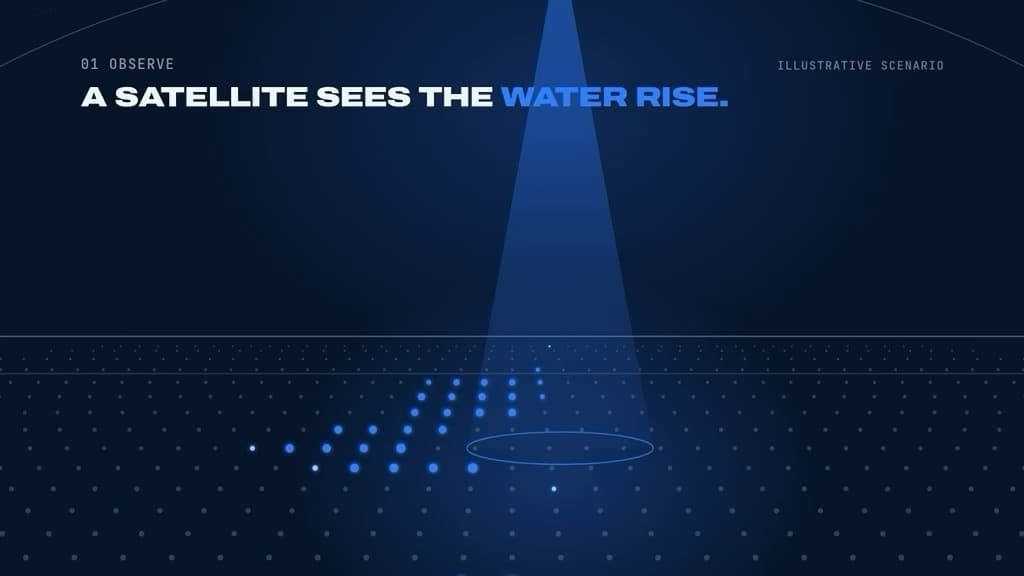
Multi-Domain SSOS Observation & Policy Authorization Cycle
Stage 01 Observe // SSOS Governance Loop // Access Authority Gating
What We Don't Claim
Engineering credibility requires stating physical and operational boundaries explicitly.
No Space-Qualified Custom Silicon Yet
Our TFLN switch designs and link budgets are currently validated on optical testbenches and in rigorous Python/NetworkX orbital physics simulations (l360_hvt_v2 to v5). Radiation-hardened space flight models are in active prototyping.
Hardware Sizing Is Indicative, Not a Purchase Guarantee
GPU VRAM requirements (e.g. 16× B200 for Kimi K3) are derived from parameter math and batch overheads. Final sizing requires actual client workload benchmarks with measured KV-cache loads before buying hardware.
Models Do Not Replace Deterministic Rules
Open-weight LLMs are probabilistic language engines. In our architecture, the LLM is strictly prohibited from being the authoritative source for system state, financial balances, or weapon/orbital safety commands.
Ground Stations Remain the Ultimate Physical Choke
While inter-satellite links operate at 100 Gbps, terrestrial downlinks are bounded by atmospheric conditions and gateway quantities. Adding 10 orbital satellites does not solve ground saturation without deploying high-elevation optical ground terminals.
Initiate Architecture Engagement
Engage directly with our systems architects. We provide full NetworkX constellation simulation reports, optical link budget calculations, and GPU cluster benchmark profiles under bilateral NDA.
For rapid operational triage or urgent defense briefing inquiries:
Open Business WhatsApp